
The question “When will hydrogen trains run in India?” is no longer a distant dream; it’s almost a reality. India is gearing up to deploy its first hydrogen-powered train, and the interest is high. Rather than a vague promise, recent developments hint at a tangible timeline, replete with trials, technical hurdles, infrastructure planning, and Indian government ambition. In this piece, we dig into what’s already been done, where things stand now, what still needs to happen, and when you might actually see a hydrogen train in service on Indian tracks.
When Will the Hydrogen Train Start In India?
India’s first hydrogen-powered train is expected to begin operations by late 2025, marking a milestone in the country’s green mobility journey. After successful prototype testing at the Integral Coach Factory (ICF) in Chennai, the train has cleared load trials and is preparing for real-world deployment. The pilot project will run on the Jind–Sonipat route in Haryana, chosen for its manageable traffic and proximity to hydrogen production facilities. Reports suggest that initial trial runs could begin as early as March 2025, with full passenger services likely by the end of the year.
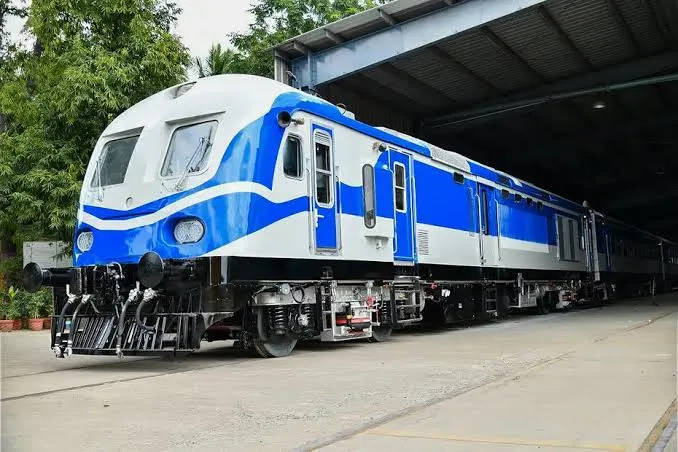
This ambitious project is part of Indian Railways’ “Hydrogen for Heritage” initiative, which plans to introduce hydrogen trains across heritage and hill routes in the coming years. The government is also investing heavily in green hydrogen infrastructure, including electrolyzers, storage tanks, and refuelling stations. With a focus on reducing carbon emissions and diesel dependence, hydrogen trains promise zero tailpipe emissions, quieter travel, and a cleaner environment. If timelines hold, Indian passengers may experience their first ride on a hydrogen-powered train before December 2025.
The Current Status Of Hydrogen Train Technology In India:
In 2025, Indian Railways and its associated research and manufacturing arms have made concrete strides toward hydrogen propulsion. For instance, a hydrogen-powered train coach (called a Driving Power Car) has already been successfully tested at the Integral Coach Factory (ICF) in Chennai. India is developing a 1,200 HP hydrogen train, a power level that outpaces many existing global counterparts.
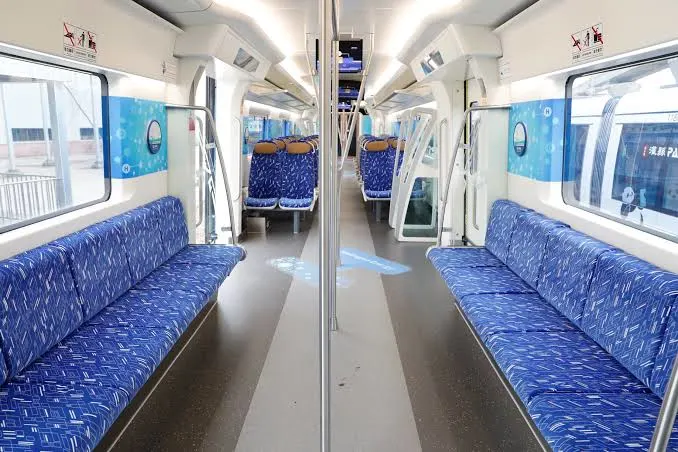
Also, the prototype has cleared load tests, a vital milestone before real-world operation. Officials say that the train is likely to be deployed on the Jind–Sonipat route in Haryana as a pilot.
But “cleared tests” doesn’t mean “in service.” There are finishing touches to be done: final integration of fuel cells, fine-tuning performance under full load, implementing safety systems, and establishing the hydrogen supply, storage, and refueling infrastructure. So, while the technology is not in a lab-only stage, it’s not yet fully operational for passengers.
The Pilot Route: Jind To Sonipat
One of the most talked-about subtopics is the Jind–Sonipat pilot. This will be the proving ground for India’s hydrogen train concept.
Key Highlights
- The pilot route is planned to stretch about 89 kilometres between Jind and Sonipat in Haryana.
- This route was chosen because it’s already part of the Northern Railway zone, has manageable traffic, and allows close proximity to infrastructure development for hydrogen production.
- Officials intend to retrofit an existing Diesel Electric Multiple Unit (DEMU) rake with hydrogen fuel cell technology for this route.
- Associated infrastructure, such as a 1 MW electrolyzer to produce hydrogen (around 430 kg daily), storage tanks, compressors, and dispensers with pre-cooling mechanisms, is being set up.
So the Jind–Sonipat route doesn’t just stand as a symbolic pilot, it encapsulates nearly all the challenges and solutions needed for hydrogen train operations in India.
Technical And Engineering Challenges:
Transitioning from concept to reality is never smooth, especially for a novel technology like hydrogen propulsion. Below are six main technical challenges India must navigate:
- Fuel Cell Integration & Stability – Ensuring that fuel cells deliver consistent power over long hours, under load, in varying weather.
- Hydrogen Storage & Safety – Storing hydrogen onboard (at high pressures) requires strict safety protocols.
- Refuelling Infrastructure – Setting up electrolyzers, compressors, dispensers, and pre-cooling systems.
- Load Performance Under Real Conditions – Handling passenger loads, gradients, acceleration, braking, etc.
- Durability & Maintenance – Components like fuel cells and compressors must withstand frequent cycling and harsh conditions.
- Regulatory & Standardisation Hurdles – Safety codes, certifications, and procedures must be established.
These challenges are not unique to India, but the diversity of terrain, climate extremes, and scale of operations makes them particularly demanding.
Institutional And Policy Framework Supporting Hydrogen Trains:
Behind every technological leap, there needs to be institutional will, policy backing, and funding. India’s move toward hydrogen trains isn’t happening in isolation; several policies and organizations are pushing it forward.
Firstly, there’s the Hydrogen for Heritage initiative, where Indian Railways aims to run about 35 hydrogen train sets on heritage and hill routes. Under this, each train is estimated to cost ~₹80 crore, and the route infrastructure ~₹70 crore.
Second, tenders to retrofit DEMU rakes with hydrogen fuel cell technology have already been floated, and contracts have been awarded to companies like Medha Servo Drives.
Third, the government’s broader push toward green hydrogen, its national hydrogen roadmap, incentives for clean energy, and the target of net-zero emissions by 2070 provide a strong environment that supports these projects.
Projected Timeline And Key Milestones:
Estimating a timeline in a nascent domain is tricky, but based on recent announcements, here’s a possible roadmap:
Short Term (2025 – Late 2025)
- Completion of technical integration and final trials.
- Certification and regulatory clearance.
- Start limited trial runs on Jind–Sonipat with a few passengers.
- Fine-tuning under real conditions.
Medium Term (2026 – 2027)
- Passenger service on the Jind–Sonipat pilot route.
- Data gathering on reliability and maintenance.
- Gradual expansion to heritage routes under “Hydrogen for Heritage.”
- Hydrogen refuelling network growth.
Long Term (2028 and beyond)
- Scaling to mainline non-electrified routes.
- Running multiple hydrogen trains across states.
- Integration with other clean mobility initiatives.
So when will hydrogen trains start in India? Very likely we’ll see the first service by 2025–26, with wider rollout by 2027 and beyond.
Environmental Benefits Of Hydrogen Trains:
When people ask why hydrogen trains matter, the clearest answer is their potential to drastically cut emissions. Traditional diesel trains spew out carbon dioxide, nitrogen oxides, and particulates that pollute the air and worsen climate change. Hydrogen trains, on the other hand, emit only water vapor and heat.
Key Benefits
- Zero Tailpipe Emissions – Unlike diesel engines, hydrogen fuel cells don’t release greenhouse gases.
- Cleaner Air For Towns And Villages – Particularly important on routes passing through populated or rural areas.
- Noise Reduction – Hydrogen trains run quieter, reducing noise pollution along the trackside.
- Climate Commitments – India has pledged net-zero by 2070, and hydrogen trains align perfectly with this ambition.
- Energy Flexibility – Hydrogen can be produced through renewable sources like solar and wind, further greening the rail sector.
For India, where large chunks of the rail network are still non-electrified, hydrogen is not just an option; it’s a cleaner lifeline.
Economic And Cost Considerations:
Hydrogen trains are promising, but they aren’t cheap. The cost of development, infrastructure, and operations needs to be weighed against long-term savings.
In the short term, retrofitting a DEMU into a hydrogen train is expected to cost around ₹80 crore. Adding infrastructure like storage, compressors, dispensers, and electrolyzers raises route-level investments by another ₹70 crore. These upfront costs seem steep.
However, the long-term picture is more balanced:
- Reduced dependence on imported fossil fuels.
- Lower maintenance compared to diesel engines, since fuel cells have fewer moving parts.
- Potential to bring down per-km running costs once hydrogen production scales up.
- Opportunities for local hydrogen production, creating regional jobs.
- Potential exports of hydrogen rail technology to other developing nations.
So, while the early figures are intimidating, the economics may tilt positively with scale and innovation.
Comparison With Global Hydrogen Train Projects:
Hydrogen rail is not just India’s experiment; countries like Germany, China, and Japan have already tested or launched hydrogen-powered trains. While India is still preparing for its first passenger rollout in late 2025, looking at global examples helps understand where India stands and how it differs in approach.
| Country | Timeline / Status | Key Features | Difference From India |
| Germany | Coradia iLint in service since 2018 | Full-fledged passenger service, widely used in Lower Saxony and other regions | India is only beginning trials, Germany already has commercial routes |
| China | Hydrogen trains unveiled, speeds up to 160 km/h | Focused on both urban transit and long-distance operations | India’s prototype is slower and still in the trial stage |
| Japan | Testing hydrogen hybrid railcars since 2022 | Builds on hydrogen expertise from cars and buses | India is retrofitting DEMUs, while Japan is testing purpose-built railcars |
| India | Expected launch by late 2025 on the Jind–Sonipat pilot route | Focused on retrofitting DEMUs, a short pilot route, tied to the Green Hydrogen Mission | Behind in timeline, but ambitious in scope and integration with national energy goals |
Public Perception And Expectations:
For ordinary passengers, hydrogen trains aren’t about fuel cells or electrolyzers; they’re about comfort, safety, and trust. People expect a clean, modern, and safe travel experience.
- Curiosity Factor – Many travelers want to ride just to experience something futuristic.
- Skepticism – Questions like “Is it safe?” or “Will hydrogen explode?” reflect common anxieties.
- Affordability – People hope fares won’t skyrocket compared to diesel alternatives.
- Comfort & Amenities – Hydrogen trains must match or exceed what passengers already get.
- Pride In Innovation – There’s excitement around India joining a global club of hydrogen-powered nations.
Managing this perception will be as important as engineering success.
Safety Protocols And Risk Management:
Hydrogen is flammable and must be handled with care. Indian Railways is implementing rigorous safety measures.
Steps Being Taken
- Use of advanced, crash-tested hydrogen tanks.
- Leak detection systems are installed on the train.
- Strict fire-suppression equipment in all hydrogen compartments.
- Special training for railway staff and engineers.
- Emergency evacuation procedures for passengers.
- Secure fencing and access controls around refuelling stations.
The goal is simple: to reassure passengers that hydrogen trains are as safe as, if not safer than, diesel or electric ones.
Long-Term Vision For Hydrogen Rail In India:
Hydrogen trains are not just a one-off project; they represent a long-term transformation.
In the next decade, India plans to:
- Scale hydrogen technology to non-electrified regional routes.
- Deploy hydrogen trains in hilly areas and tourist destinations.
- Build green hydrogen hubs along major corridors.
- Attract private partnerships for hydrogen supply chains.
- Develop indigenous fuel cell technology to reduce costs.
- Create a hydrogen rail ecosystem that could serve as a model for other nations.
This long-term vision ties directly to India’s green mobility goals and its aspiration to become a hydrogen superpower.
Conclusion:
So, when will hydrogen trains start in India? If timelines hold, the first passenger services could appear by 2025–26 on the Jind–Sonipat route. Wider rollout across heritage and non-electrified routes may come by 2027 and beyond.
It’s not just about replacing diesel engines, it’s about reimagining how India’s railways can be cleaner, quieter, and more sustainable. Hydrogen trains may start with one route, but their journey could reshape the future of Indian travel.
FAQs:
Likely between late 2025 and 2026, starting on the Jind–Sonipat route in Haryana.
It’s a short, manageable stretch that allows easy setup of hydrogen production and refuelling infrastructure.
Yes, with proper protocols. Advanced storage, leak detection, and fire suppression make them safe for passengers.
Retrofitting a DEMU into hydrogen mode costs ~₹80 crore, plus ~₹70 crore for route-level infrastructure.
They produce zero emissions, run quieter, reduce air pollution, and align with India’s green goals.