
India’s rail network has always been a fascinating tapestry of engineering, ambition, and human stories. When we ask “which is the fastest train in India”, it’s not just about speed, it’s about progress, aspiration, and how far railways have come in blending efficiency and comfort. In recent years, the term “fastest train” is often linked with Vande Bharat, but the reality has nuances: test speeds vs operational speeds, track constraints, and evolving projects.
In this article we’ll dive deep, not just the headline “fastest train,” but what that means, why it matters, and where India is heading. Let’s begin the ride.
Vande Bharat: Fastest Train In India
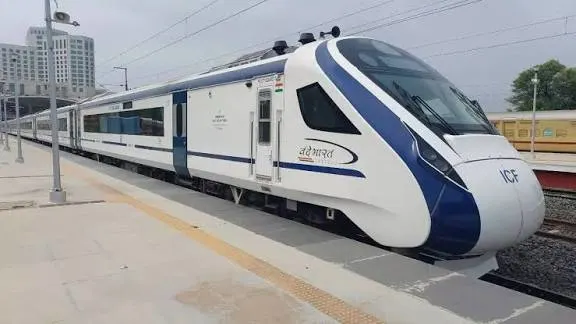
When people talk about speed and modernity in Indian Railways, the conversation almost always leads to Vande Bharat Express. This train is more than just a mode of transport, it represents a shift in how Indians perceive rail travel.
Designed and manufactured under the ‘Make in India’ initiative, Vande Bharat is a semi-high-speed train that combines speed, comfort, and advanced engineering. It has become the flagship of Indian Railways’ modernization efforts.
- First launched between New Delhi and Varanasi in 2019
- Self-propelled trainset without a separate engine
- Achieves 180 km/h in tests, 160 km/h in regular service
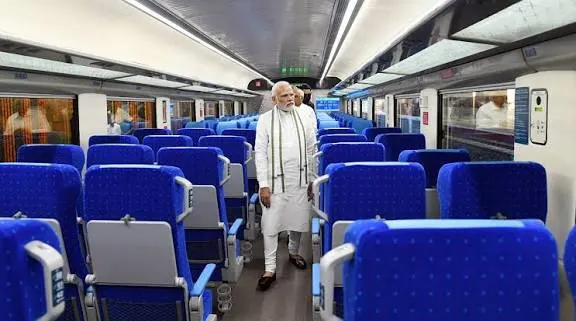
- Comfortable seating, LED lighting, infotainment, and Wi-Fi
- Reduced travel time on busy routes
- Represents ‘Make in India’ engineering success
- Expanding to multiple routes across the country
Unlike older trains, Vande Bharat is a self-propelled trainset, meaning it does not rely on a separate locomotive. This design allows it to accelerate and decelerate much faster, saving valuable minutes on each trip. With its sleek aerodynamic look, automatic doors, large windows, and airline-style interiors, it offers passengers a new benchmark of comfort. On the operational front, it runs at speeds of up to 160 km/h, while test runs have successfully achieved 180 km/h.
Why Speed Matters In Indian Railways?
Faster trains shrink distances. For a commuter, a 30 km stretch becomes bearable; for a traveling professional, a city once considered far feels within reach. Reduced travel time means less fatigue, more productivity, and perhaps the option to make same-day return trips. On the network level, faster trains can lead to more efficient scheduling: when one rake finishes its trip sooner, it can be redeployed, thereby increasing utilization. For the railways, this means better asset efficiency. Beyond that, it’s symbolic, showcasing that India is pushing the envelope in infrastructure, technology, and intent.
- Improves commuter convenience and quality of life
- Enables more frequent train rotations (better usage of rakes)
- Reduces dwell time, increasing punctuality
- Makes longer distances accessible within a day
- Enhances India’s image in transport innovation
- Encourages investments in tracks, signaling, and rolling stock
Historical Context Of Train Speeds In India:
In the early decades, steam engines and early diesels rarely exceeded 100 km/h, constrained by track design and safety concerns. As electrification expanded from mid-20th century onward, speeds rose steadily. The shift from ICF coaches to LHB (Linke Hofmann Busch) designs allowed safer operation at higher speeds.
- Early steam/diesel era: limited by track and braking systems
- Introduction of electrification boosted potential speeds
- Shifting from ICF to LHB coaches allowed better speed stability
- Locomotives like WAP-5, WAP-7 expanded speed capabilities
- Trials of semi-high speed units (EMU / trainsets) began
- Infrastructure upgrades (tracks, signaling) lagged in many corridors
- Political will and investment cycles shaped progress
In recent decades, with advanced locomotives like WAP-5 and WAP-7, and the introduction of multiple unit designs (like Vande Bharat), India began flirting with semi-high-speed regimes. But there’s always been a tension: can the track, signaling, and infrastructure support these machines?
Which Train Holds The Title Today?
As of current publicly available information, Vande Bharat Express (also known as Train-18) is widely regarded as India’s fastest operational trainset. In test runs it has achieved speeds of about 180 km/h. But in actual commercial service, on many routes its top permissible speed is 160 km/h. On certain stretches, track and signaling constraints force it to run lower. Meanwhile, other trains like Gatimaan Express also clock in 160 km/h in specific sections, making them among the fastest services.
But speed isn’t a single fixed figure, we must distinguish:
- Test / design speed: the maximum speed the trainset or locomotive can achieve under ideal conditions
- Operational (permitted) speed: the speed allowed on given track sections during normal service
- Average speed: considering halts, curves, speed restrictions, this is far lower and what passengers actually experience
Thus, in the “real world,” Vande Bharat is generally accepted as the fastest, though parts of its speed potential remain constrained by infrastructure.
List Of Vande Bharat Express Trains In India:
The Vande Bharat Express has quickly become the pride of Indian Railways, offering faster travel, modern interiors, and improved passenger comfort. Since its first launch in 2019, the network has been expanding steadily, connecting major cities and reducing travel times across states. Here’s a list of some prominent Vande Bharat Express trains currently operating in India:
- New Delhi – Varanasi Vande Bharat Express (the first Vande Bharat, launched in 2019)
- New Delhi – Katra Vande Bharat Express (connects the national capital to Vaishno Devi pilgrimage route)
- Gandhinagar – Mumbai Central Vande Bharat Express (first for western India, connects Gujarat and Maharashtra)
- Bilaspur – Nagpur Vande Bharat Express (boosts central India connectivity)
- Howrah – New Jalpaiguri Vande Bharat Express (first for West Bengal, connects to north Bengal and Sikkim region)
- Secunderabad – Visakhapatnam Vande Bharat Express (first for Andhra Pradesh and Telangana)
- Chennai – Mysuru Vande Bharat Express (southern India’s first service)
- Mumbai – Solapur Vande Bharat Express (eases travel in Maharashtra’s busiest corridor)
- Mumbai – Shirdi Vande Bharat Express (popular among pilgrims and tourists)
- Bhopal (Rani Kamalapati) – New Delhi Vande Bharat Express (among the fastest-running trains)
Technical Factors That Limit Top Speed:
Think of a car: you may have a high-speed engine, but worn roads or curves force you to slow down. Trains are similar. The tracks, signaling, gradient, curvature, and braking systems all interplay. Even if locomotive and coach design allow high speed, if the track geometry is not built for it, operations must be restricted. Also, safety systems (like ATP, ETCS), track condition, wear and tear, and maintenance schedules influence what is “safe speed.” Upgrading these is costly, time-intensive, and often constrained by legacy infrastructure. Moreover, interactions with slower trains on shared tracks demand safety buffers and can force overall speeds to reduce.
- Track alignment and curvature: tight curves force lower speeds
- Track strength and ballast: weaker track limits dynamic loads
- Signaling & safety systems (ATP/ETCS): lack of real-time safety systems restrict speed
- Gradient and elevation: steep gradients reduce achievable speed
- Braking and adhesion: safe stopping distance matters
- Mixed traffic: slower freight or passenger trains on same lines hamper speed scheduling
- Maintenance and track quality: wear & tear demand speed restrictions
Route Examples Where The Fast Train Runs:
One of the benchmark routes is between New Delhi and Agra on the Tughlakabad–Agra section, where Vande Bharat or Gatimaan may hit 160 km/h in certain stretches.
- New Delhi ↔ Agra: short, straight sections allow higher speeds
- New Delhi ↔ Rani Kamalapati: used by Vande Bharat for high-speed operation
- Select corridors where infrastructure is upgraded & maintenance high
- Some test corridors (not commercial) push even more speed
- Future corridors (like Delhi–Ahmedabad) aim to host bullet or high-speed trains
- Mixed use sections constrain continuous high speed
Another key route is New Delhi to Rani Kamalapati (Habibganj) via Hazrat Nizamuddin, where the Vande Bharat’s capabilities are tested. Some semi-high speed corridors plan to push these further, but as of now, operational limits prevail.
Vande Bharat Vs Other Fast Trains In India:
When we discuss India’s fastest trains, Vande Bharat often tops the list, but it is not the only contender. Other premium trains like Gatimaan Express, Shatabdi Express, and Rajdhani Express have also set benchmarks in terms of speed and passenger experience. Each train has its own significance, while Vande Bharat represents modern engineering and speed, Gatimaan is known for being India’s first semi-high-speed luxury service, and Shatabdi has long been the backbone of intercity day travel. A clear comparison helps us see how Vande Bharat stands out while also acknowledging the legacy of others.
| Train Name | Maximum Speed | Operational Speed | Year Introduced | Key Route Example | Special Features |
| Vande Bharat Express | 180 km/h (test) | 160 km/h | 2019 | New Delhi – Varanasi, Mumbai – Ahmedabad | Self-propelled trainset, modern interiors, faster acceleration, Make in India project |
| Gatimaan Express | 160 km/h | 160 km/h | 2016 | New Delhi – Agra | India’s first semi-high-speed train, onboard entertainment, luxury service |
| Shatabdi Express | 150 km/h | 130–150 km/h | 1988 | New Delhi – Bhopal | Pioneer of high-speed daytime travel, comfortable seating |
| Rajdhani Express | 140 km/h | 130–140 km/h | 1969 | New Delhi – Mumbai, Kolkata | First fully air-conditioned premium service, connects major metros |
| Duronto Express | 130–135 km/h | 130 km/h | 2009 | Mumbai – Howrah, Sealdah – Delhi | Non-stop end-to-end service with limited halts, AC comfort |
Future Plans For High-Speed Rail In India:
India’s future in rail transport isn’t just about semi-high-speed trains. The Mumbai–Ahmedabad Bullet Train project stands as a symbol of what lies ahead. Planned to operate at 320 km/h, this Shinkansen-based system could redefine what Indians imagine train travel to be. But it’s not without challenges, land acquisition issues, project delays, and massive funding needs. Still, the ambition reflects a country eager to catch up with global leaders in rail speed. If executed well, this project could inspire further high-speed corridors across India.
- Mumbai–Ahmedabad: India’s first bullet train corridor
- Japanese Shinkansen technology being adopted
- Target top speed: 320 km/h
- Significant reduction in travel time between two major cities
- Challenges include land disputes and project cost escalation
- Potential for replication in other corridors if successful
Comparison With Global High-Speed Trains:
High-speed rail is a field where different countries showcase their engineering prowess. While Vande Bharat has redefined speed within India, globally the benchmarks are far higher. Countries like China, Japan, and France have decades of experience operating superfast trains, and their networks set the standard for efficiency and speed. The table below gives a clear comparison of how India currently stands and what it aspires to achieve.
| Country | Train Name / System | Operational Speed | Test / Record Speed | Special Notes |
| China | Fuxing (CRH Series) | 350 km/h | ~400 km/h in trials | World’s largest high-speed rail network |
| Japan | Shinkansen | 300 km/h | 443 km/h (test) | Operational since 1964, globally admired for safety & punctuality |
| France | TGV | 320 km/h | 574 km/h (world record, 2007) | Holds record for fastest conventional train |
| India | Vande Bharat Express | 160 km/h | 180 km/h (test) | First semi-high-speed trainset built under ‘Make in India’ |
Passenger Experience On The Fastest Trains:
It’s one thing to talk about speed on paper, but what do passengers actually feel? The Vande Bharat trains have already shown how modern interiors, reduced noise, and smoother rides make a difference. Passengers often describe the ride as “airline-like,” with reclining seats, large windows, infotainment screens, and faster acceleration. The biggest difference, however, is the time saved, people who once had to take an overnight journey can now complete trips in just a few hours.
- Comfortable seating with modern interiors
- Large windows for better viewing
- Airline-style ambience with lighting and infotainment
- Faster acceleration and smooth braking
- Less noise compared to traditional trains
- Reduced travel time brings convenience for business travelers
Economic Impact Of Faster Trains:
Faster trains aren’t just a lifestyle upgrade, they have measurable economic impacts. By reducing travel times, they expand business catchment areas, encourage regional trade, and create job opportunities. The Vande Bharat project itself has boosted local manufacturing with significant parts made in India. Moreover, high-speed corridors lead to urban development along the routes, creating new hubs of growth.
Enhances regional connectivity and trade. Creates jobs in rail manufacturing and infrastructure. Boosts tourism by making destinations more accessible. Reduces dependency on air travel for short-medium distances. Spurs real estate growth around high-speed stations. Encourages technology transfer and local innovation
The Road Ahead For Indian Railways:
Looking forward, India’s railways have to strike a balance between ambition and reality. Semi-high-speed trains like Vande Bharat can be scaled up relatively quickly across corridors, bringing visible change in the short term. At the same time, flagship bullet train projects should proceed carefully but steadily. With consistent investment, political will, and technological partnerships, India could well see itself operating multiple high-speed corridors by the 2030s. For passengers, that means faster, more reliable, and more comfortable travel, and for the nation, it means another step towards modern infrastructure parity with the world.
- Expansion of Vande Bharat to more routes
- Bullet train corridor as a test case for India
- Need for steady infrastructure upgrades
- Public-private partnerships could speed up progress
- Potential to integrate high-speed trains with metro/air travel for seamless journeys
Challenges In Implementing High-Speed Trains:
While India dreams of world-class bullet trains, the road ahead isn’t easy. Below is a clear view of the biggest challenges and the potential solutions that could help overcome them.
| Challenges | Solutions |
| Land acquisition conflicts delay projects | Offer transparent compensation, rehabilitation, and community-friendly resettlement policies |
| High costs and funding challenges | Promote Public-Private Partnerships (PPP) and seek foreign collaborations/loans |
| Existing track network unsuitable for very high speeds | Build dedicated high-speed corridors separate from existing passenger and freight lines |
| Political changes slowing project continuity | Establish long-term, bipartisan policies for rail modernization |
| High maintenance costs for high-speed lines | Use advanced global technology and predictive maintenance systems |
| Balancing freight and passenger needs | Plan integrated traffic management with clear separation of corridors |
Conclusion:
The fastest train in India today is the Vande Bharat Express, with operational speeds of 160 km/h and test speeds of 180 km/h. While that’s impressive in the Indian context, it’s only the beginning of a larger transformation. With the bullet train project in the works and Vande Bharat expanding, India’s railways are on the cusp of a new era. For passengers, the payoff is simple, faster, safer, and more comfortable journeys. For the country, it signals ambition, modernization, and a commitment to progress.
FAQs:
The Vande Bharat Express, with an operational speed of 160 km/h, is considered the fastest train in India.
It has reached up to 180 km/h in test runs, though normal service is capped at 160 km/h.
Both touch 160 km/h, but Vande Bharat offers quicker acceleration and overall better travel experience.
Yes, the Mumbai–Ahmedabad Bullet Train project is underway, aiming for 320 km/h operations, though it faces delays.
Track conditions, signaling systems, and safety requirements often restrict trains to lower speeds than their design capabilities.