
Picture this: you’re packing for a train trip and suddenly pause at that bottle of rum or wine you bought. Can it come along? The answer isn’t as simple as yes or no. Indian Railways has its rules, but state excise laws add extra layers of confusion. While some states permit small, sealed quantities, others have total bans. Add to that the strict enforcement by railway staff, and the journey with alcohol could become riskier than expected. In this guide, we break it all down, step by step, so you know what to expect before placing that bottle in your bag.
Can We Carry Alcohol On the Train?
The big question for many travelers is simple: can we actually carry alcohol on a train? The answer isn’t a straight yes or no, because it depends on where you’re travelling, which states you pass through, and how Indian Railways enforces its own rules. Officially, Indian Railways discourages carrying liquor altogether to avoid conflicts with state excise laws. In states where alcohol is legal, a sealed bottle in small quantities for personal use might not attract much attention, but that does not mean it is permitted by default.
The moment your train enters a prohibition state like Bihar or Gujarat, the same bottle that was harmless elsewhere can turn into an offence. Adding to that, railway security checks are unpredictable; sometimes baggage is scanned thoroughly, other times not at all, leaving passengers with mixed experiences.
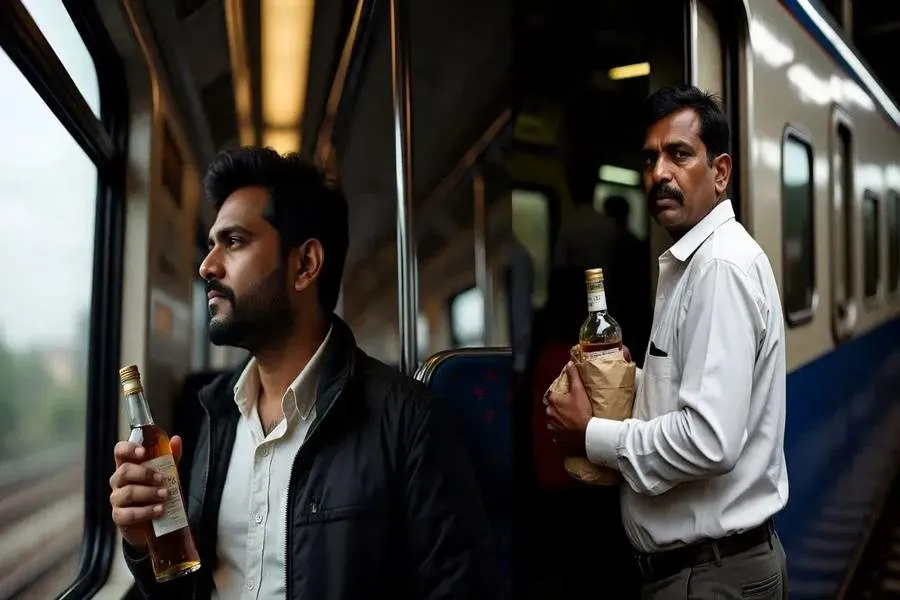
It is also important to remember that “carrying” and “consuming” are treated differently. Even if carrying is overlooked in certain states, drinking inside trains is strictly banned nationwide. Railways consider alcohol carriage not just as a passenger choice but as a matter of law, safety, and public order. So while a few people may manage to carry a sealed bottle unnoticed, the official stance is tilted against it. The safest way to answer this question is: yes, in rare cases you can, but practically and legally, it is risky, inconsistent, and strongly discouraged.
Legal Basis And Railway Powers:
The legality of carrying alcohol on trains is a patchwork of national railway rules and state excise laws. The Railways Act, 1989, gives authorities the power to regulate and even confiscate goods they classify as unauthorized. Alcohol falls under this “sensitive” category, especially when moving between states.
Key takeaways about legal basis:
- The Railways Act, 1989, empowers railway officials to restrict and seize goods, including alcohol.
- State excise laws decide whether liquor can be carried or transported.
- In prohibition states, even possession of alcohol is a punishable offence.
- Rules differ from state to state, what’s fine in one might be illegal in another.
- Railways usually take the stricter approach to maintain uniformity.
- Alcohol carriage is often treated as a “public safety” matter, not just a luggage issue.
- This dual system means you must obey both railway and state rules simultaneously.
State-Wise Variations And Prohibition States:
Carrying liquor on trains becomes complicated because India has different rules across states. Some enforce complete prohibition, others allow regulated limits, and some focus on interstate restrictions.
Important points to know about state rules:
- Dry states like Gujarat, Bihar, and Nagaland prohibit liquor completely.
- If a train crosses into these states, even sealed bottles may land you in legal trouble.
- Other states permit small, sealed quantities strictly for personal use.
- Large quantities usually require an excise transport permit.
- Transit states may allow alcohol locally but restrict its entry from other states.
- Prohibition penalties vary, including fines, confiscation, or even imprisonment.
- Always check the laws of your origin, transit, and destination states.
Railway Policy And Enforcement Realities:
Even if a state allows you to carry liquor, Indian Railways often has a blanket no-alcohol policy to avoid confusion and maintain security. Officials from the Railway Protection Force (RPF) and Government Railway Police (GRP) enforce this.
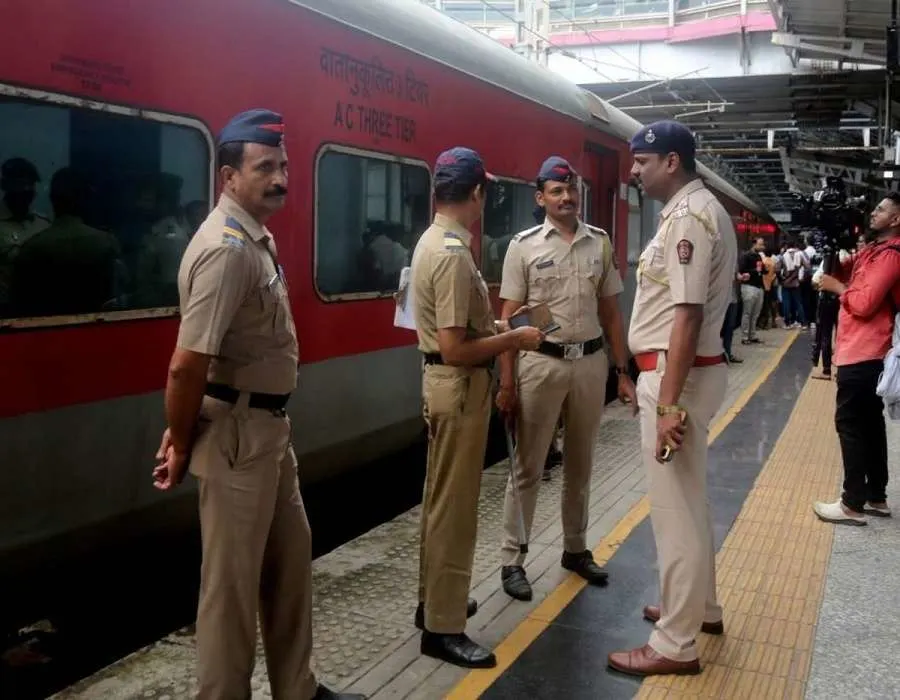
What happens in practice:
- Luggage checks at stations may detect alcohol bottles.
- Sealed or unsealed bottles can be seized on the spot.
- Passengers may face fines for carrying contraband.
- In prohibition states, cases can be handed to the excise police.
- Alcohol consumption on board is treated as disorderly conduct.
- Enforcement may vary by route and vigilance level.
- Even anecdotal “successful” carriage is risky and unreliable.
Penalties, Seizures, And Legal Risks:
The consequences of carrying alcohol on trains are not uniform. Some passengers lose their bottles; others face harsher punishments depending on state laws.
Possible risks include:
- Confiscation of the liquor without refund.
- On-the-spot fines by railway authorities.
- Criminal cases under state excise laws in prohibition areas.
- Public nuisance charges if alcohol is consumed on board.
- Penalties for tax evasion if excise duties are bypassed.
- Legal referrals to the excise or police authorities.
- Travel delays due to police or RPF questioning
Why State Borders Complicate Matters?
One of the biggest challenges of carrying alcohol on trains is the constant crossing of state borders. A journey that begins in a state where liquor is legal might pass through a prohibition state within just a few hours, and suddenly what was acceptable becomes an offence. This shifting legal landscape creates confusion and risk for travelers. Excise officers in some regions conduct surprise checks at border stations, making passengers vulnerable to penalties even if they are carrying just a sealed bottle with a bill.
States also view interstate liquor movement as a matter of tax and revenue, so they tend to be strict about outside alcohol entering their boundaries. The complication deepens because each state has its own limit on what qualifies as “personal use.” In one place, a single bottle might be fine, but in another it may still be illegal. For passengers, this unpredictability often turns a simple decision into a stressful one. That’s why many seasoned travelers advise avoiding the carriage of liquor altogether during multi-state journeys; it is safer to enjoy it before departure or after arrival rather than risk trouble in transit.
Quantity Limits And Permits:
Even in states where alcohol is not banned, there are strict rules on how much one can carry. Crossing those limits can bring penalties similar to smuggling.
What to know about limits and permits:
- Most states allow only 1–2 sealed bottles for personal use.
- Carrying larger amounts often requires a state-issued excise permit.
- Without a permit, alcohol can be treated as commercial transport.
- Permits are especially required for the interstate movement of liquor.
- Some states charge extra duty on out-of-state alcohol.
- Rules can differ between beer, wine, and hard liquor.
- Always check state excise websites before traveling with alcohol.
Carrying Vs Consuming Alcohol On Trains:
Many travelers confuse the idea of carrying alcohol with consuming it during the journey, but Indian Railways makes a sharp distinction between the two. While carrying a small, sealed bottle might sometimes slip through depending on state laws and enforcement, drinking on board is an offence everywhere. Understanding this difference is crucial, as the consequences of consumption are much stricter than merely being caught with a sealed bottle.
| Aspect | Carrying Alcohol | Consuming Alcohol |
| Legality | Tolerated in some states if sealed and limited, but still risky | Completely banned across all trains in India |
| Enforcement | It may be ignored in non-prohibition states, but confiscation is possible | Strictly enforced with no exceptions |
| Penalties | Confiscation or fine, especially in prohibition states | Immediate fines and removal from the train |
| Impact On Others | Usually none if kept sealed and discreet | Disturbs co-passengers and creates a nuisance |
| Exceptions | None in prohibition states | No exceptions, not even in AC coaches |
| Long-Term Consequences | Possible legal trouble if crossing state borders | Can lead to permanent travel restrictions |
| Advice | Carry only if absolutely necessary, sealed and billed | Never consume on board, wait until the destination |
Practical Tips For Travelers:
Many passengers take chances with liquor on trains, but it helps to be cautious. A few practical steps can reduce risks if you absolutely must carry it.
Traveler tips:
- Keep bottles sealed and properly packed.
- Carry the purchase bill with you as proof.
- Avoid traveling with alcohol through prohibition states.
- Do not carry more than 1–2 bottles.
- Keep alcohol away from easily accessible luggage.
- Never attempt to consume onboard.
- When in doubt, leave it at home; it’s safer than risking penalties.
Real Life Experiences Of Passengers:
Over the years, travelers have shared mixed experiences. Some journeys passed without checks, while others turned into nightmares.
- Forum stories suggest sealed bottles often go unnoticed during normal checks.
- In border states like Bihar and Gujarat, passengers report stringent inspections.
- One passenger narrated that even carrying a single wine bottle got him fined in Bihar.
- Others claimed on routes like Delhi–Mumbai, alcohol was ignored if kept discreet.
- A few travelers were handed over to the police when found in coaches.
These accounts highlight that enforcement is often inconsistent, but when strict, the penalties can be severe.
Safer Alternatives To Carrying Alcohol:
If your trip feels incomplete without a drink, consider alternatives that won’t cause trouble.
Options you can try instead:
- Enjoy alcohol at your origin or destination instead of carrying it.
- If staying overnight, buy locally at your destination.
- In prohibition states, respect local rules and avoid liquor.
- Opt for non-alcoholic beers or mocktails for the journey.
- Focus on regional delicacies and train food experiences.
- Carry soft drinks, juices, or energy drinks as substitutes.
- Remember, being safe and respectful of laws beats the risk.
Conclusion:
Carrying alcohol on trains in India isn’t a straightforward yes or no. While some states allow limited personal quantities, prohibition states treat it as a crime. Indian Railways itself discourages and often bans carriage altogether to avoid confusion and legal headaches. Sealed bottles, purchase bills, and limited quantities may reduce risk, but never eliminate it. Ultimately, the safest choice is to respect the rules of the railway and the states you cross. After all, a smooth journey is worth more than a risky bottle of liquor.
FAQs:
You might, in some states, but Indian Railways generally discourage it. Always check the exercise rules of your route.
Penalties can include confiscation, fines, or even jail depending on state laws.
No. Consumption of alcohol is banned across all Indian trains.
Yes, if you’re carrying more than a couple of bottles. Some states require an excise permit even for small quantities.
Buy alcohol at your destination or enjoy non-alcoholic alternatives during your journey.